

Good morning, Construction Pros. This week, AI power demand pushed two industry giants to build their own private grid in West Texas, while construction hiring quietly sank to a 25-year low.
- Project Kilby takes shape: Microsoft and Chevron signed a 20-year deal for a 2.67 GW off-grid gas plant co-located with a hyperscale AI campus in Pecos, Texas. The template just got proved out.
- Toyota bets $3.6B on San Antonio: A second assembly line and 2.5 million square feet of new industrial space mean years of concrete, steel, and MEP work in South Central Texas.
- Hiring hits a wall: Construction job openings rose to 298,000, a 10-month high. The actual hiring rate fell to 3.5%, the lowest in 25 years. Something is not adding up.
Know someone who would like this? Pass it on.
📊 MARKET PULSE
LABOR MARKET
|
Job Openings 298,000 +32,000 MoM. 10-mo. high. ABC/BLS JOLTS |
Hiring Rate 3.5% 25-yr record low. Down 0.3%. BLS JOLTS |
|
Quit Rate 1.3% Down 0.4%. Near multi-yr low. BLS JOLTS |
Unemployment (NSA) 4.7% +0.6% MoM. High June since 2021. BLS CES |
MATERIALS AND COST
|
Diesel (Natl. Avg.) $4.578 -$0.09 WoW. +$0.84 vs. yr-ago. EIA |
Steel (Domestic Mill) $1,130/ton Flat. 25% Sec. 232 tariff active. SteelBenchmarker |
|
Nonres. Input Prices +9.7% YoY +2.4% MoM. Fastest since 2022. ABC/BLS PPI |
Copper (LME Spot) $13,090/MT -4.2% MoM spot. Wire up 24.2% YoY. LME/WSJ |
LABOR PULSE
Right now it is a tale of two markets. Your existing crew is sitting tight, with quit rates near record lows and unemployment ticking up to a healthy 4.7%. But if your next project touches data centers or semiconductor facilities, commercial electricians and HVAC pipefitters are in extreme demand with no real pool to draw from. Contractors are holding crews rather than hiring because macroeconomic uncertainty keeps new starts on ice. If you are staffing a specialized tech build, plan hard for it.
THE TAKEAWAY
Input costs are up 9.7% year over year and climbing at their fastest pace since 2022. Section 232 tariffs have insulated steel and copper from global spot relief, so LME declines are not landing in your material quotes. Lock in supplier pricing within 15 days of bid, include a BLS PPI-indexed escalation clause, and do not sign fixed-price multi-year work without a built-in cost trigger on structural metals and copper wire.
🏗 THE BIG MOVES
CIVIL STRUCTURAL MEPToyota Drops $3.6B on San Antonio, Adding a Second Assembly Line by 2030
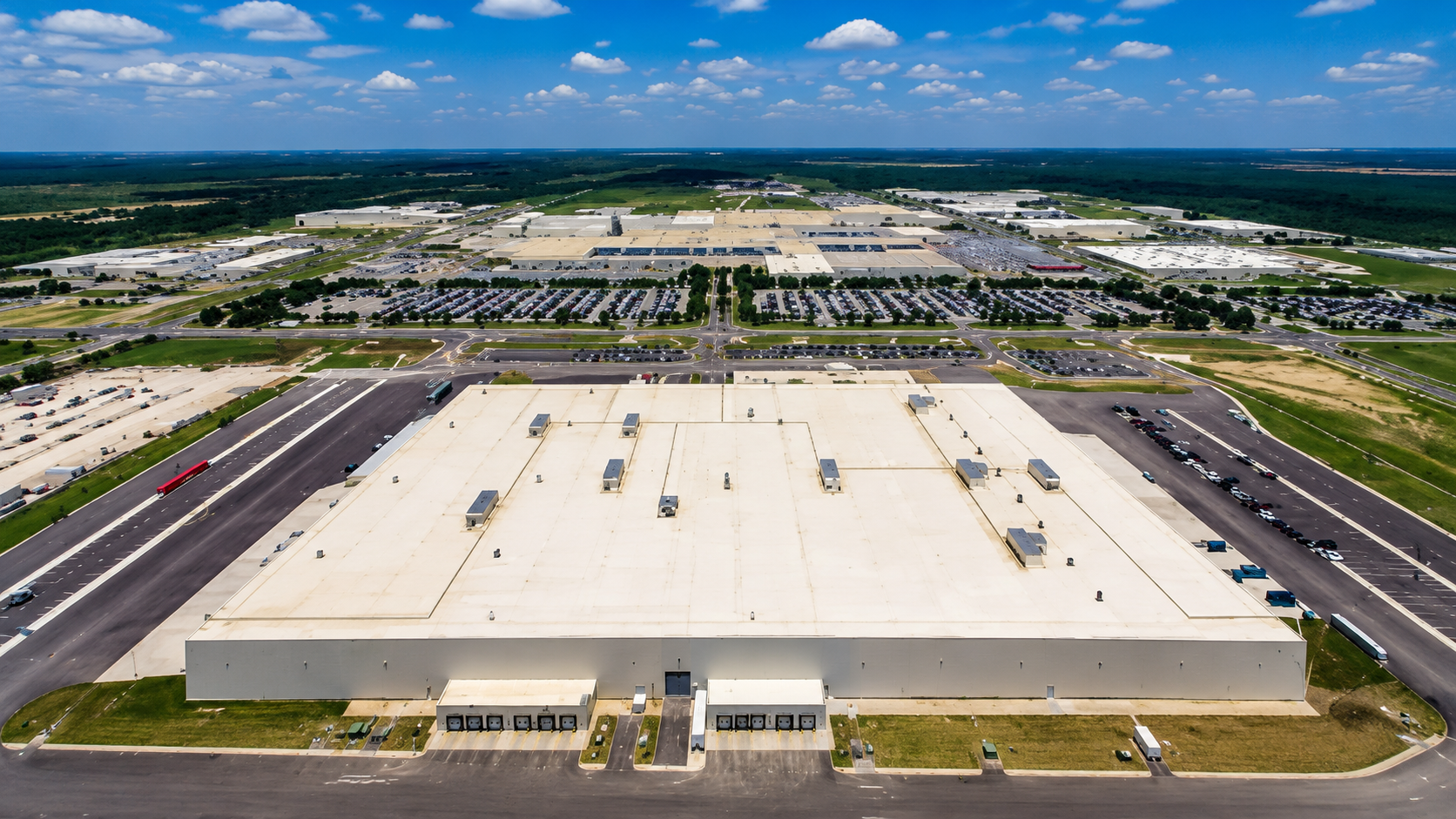
Toyota Motor North America announced a $3.6 billion expansion of its San Antonio campus, doubling the facility's footprint with 2.5 million square feet of heavy industrial space to house a second vehicle assembly line, targeting production start by 2030. The build demands heavy civil and site prep crews, concrete foundation specialists, structural steel erectors, and a full MEP fit-out for a highly automated production environment. South Central Texas concrete, steel, and electrical crews are looking at a sustained four-year pipeline pulling from both the San Antonio and Austin labor pools.
CIVIL ELECTRICAL
Newark Airport's $3.5B AirTrain Replacement Goes Vertical
The Port Authority of New York and New Jersey officially kicked off guideway construction on the $3.5 billion AirTrain Newark replacement, deploying Tutor Perini and O&G on a joint venture to deliver a new automated people-mover system by 2030, fully retiring the 1996-era infrastructure. The 2.5-mile elevated guideway over an active international airport demands pile drivers, structural steel erectors, commercial electricians, and rail systems technicians executing precise phase sequencing while the existing AirTrain stays live. That active-operations constraint locks every scope into tight windows, guaranteeing premium hours and long-term security for specialized heavy civil and electrical crews from the Northern New Jersey and New York metro area.
ELECTRICAL
AEP Texas Closes $3.26B Federal Loan to Rebuild 2,800 Miles of Transmission
American Electric Power closed a $3.26 billion DOE loan on July 8 to upgrade 2,800 miles of Texas transmission lines, responding to 41 gigawatts of new load demand from AI data centers, advanced manufacturing, and Permian Basin operations. The portfolio spans nearly 100 individual projects requiring high-voltage transmission lineworkers, heavy equipment operators, civil sitework crews, and electrical substation technicians across South and West Texas. With most available high-voltage crews in the state already committed, this federally backed backlog will pull transient linemen from neighboring states for years.
🔦 PROJECT SPOTLIGHT
DATA/TECH MEP ELECTRICALProject Kilby: Microsoft and Chevron Build an Off-Grid AI City in the Permian Basin
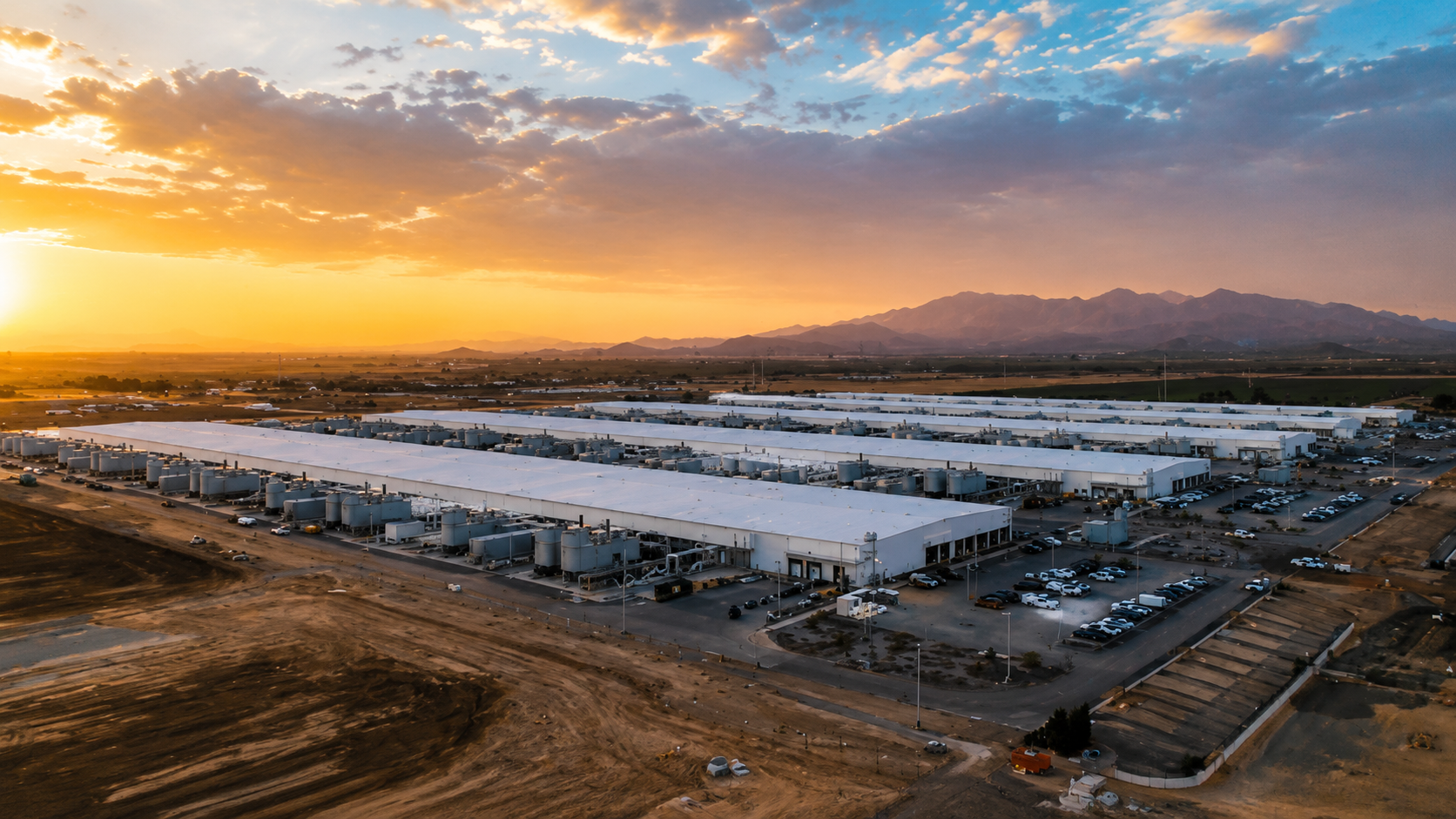
Microsoft and Chevron signed a 20-year power purchase agreement for Project Kilby: a 2.67-gigawatt off-grid natural gas power plant co-located with a hyperscale AI data center on 2,000 acres in Pecos, Texas, with total cost estimated at $7 to $9 billion and first power targeted for 2028.
Chevron has already secured GE Vernova and Solar Turbines equipment for the generation side, where heavy mechanical crews, millwrights, and pipefitters will install massive gas turbine packages and natural gas feed lines. On the data center footprint, inside wiremen, low-voltage technicians, and HVAC specialists will build ultra-high-density data halls with advanced liquid cooling loops, while dedicated electrical crews construct the dedicated substations and switchgear that form the islanded microgrid connecting both facilities. Because the Permian Basin has severe water scarcity, the design integrates non-potable brackish groundwater and recycled produced water from local oil operations for cooling, adding a layer of technical complexity rarely seen on a single jobsite.
WHY IT MATTERS
Project Kilby is the first commercially viable template for off-grid AI power. When the public grid cannot deliver fast enough, tech giants build their own. Every major hyperscaler is watching this build. Expect more co-located power-and-compute campuses in energy-rich corridors, each demanding the same combination of heavy mechanical, high-voltage electrical, and advanced MEP trades working simultaneously on the same fence line.
Final investment decision is expected in late 2026. At peak build-out, this site will require 6,000 workers, creating severe labor demand across the Permian Basin and likely pulling traveling trades from across the Sunbelt.
⚡ QUICK HITS
Philadelphia painters win 36%. IUPAT members refused to cross UNITE HERE Local 274 picket lines at a Sheraton hotel renovation, halting work for nine days before a tentative agreement secured a 36% wage and benefit increase for hospitality workers. The timing was deliberate: the 2026 FIFA World Cup packed Philadelphia's summer calendar and maximized bargaining leverage.
Chip plants face 157,000-worker deficit. McKinsey, SEMI, and NSF project a skilled microelectronics talent shortfall of up to 157,000 workers by 2030, concentrated in Texas, Arizona, New York, Ohio, and California. Without immediate workforce development, billions in CHIPS Act-funded gigaprojects face major delay risks.
Broadcom locks in Apple deal. Underpinned by a historic $30 billion chip procurement agreement with Apple, Broadcom is investing $1.5 billion to expand its Fort Collins, Colorado, radio-frequency manufacturing campus through 2031. Cleanroom construction, advanced HVAC, and high-purity piping will compete for the same specialized trade pool as semiconductor builds already underway across Northern Colorado.
Cal/OSHA activates SoCal heat inspections. With temperatures hitting 90 to 100 degrees across Los Angeles, Ventura, and San Luis Obispo counties, Cal/OSHA has deployed compliance officers to verify written heat prevention programs, cool water access, and shaded rest areas on active jobsites. Under state law, you have the right to demand all three.
Manhattan columns buckle mid-conversion. Structural engineers are stabilizing a Manhattan building where structural columns buckled during New York City's largest office-to-residential conversion, with an engineer saying the top floors are likely misaligned. Crews have halted vertical work while the remediation scope is defined.
🔲 ONE NUMBER
Construction job openings hit a 10-month high in May, at the exact moment actual hiring matched a 25-year record low.
🔧 THE TOOL
This week's JOLTS release showed a split worth tracking: 298,000 open construction jobs at a 10-month high, while the actual hiring rate fell to 3.5%, matching a 25-year record low. That gap is not random noise.
When openings surge and hiring stalls, it means one thing: a small group of trade classifications is in extreme demand with no real pool to fill them. Right now that is commercial electricians and HVAC pipefitters on data center and semiconductor builds. If you are estimating any project that needs those trades, price them separately from your general labor burden. Lock in the specific crew before you mobilize, add a dedicated retention clause to the subcontract, and build a wage escalation reserve for that line item tied to the quarterly ECI. The broad market looks stable. The trades you actually need right now are not.
📚 FURTHER READING

AGC: Construction Employment Increases By 11,000 In June - Why nonresidential is adding crews while residential sheds them, and why that may not last without a new highway bill.
Insurance Journal: Labor Crunch Tests Growth Limits for US Data Center Builders - How the shortage of commercial electricians and HVAC supervisors is forcing contractors to poach crews or decline high-margin megaprojects entirely.
This week confirmed what you already feel on the ground: AI is building its own power grid, Toyota is reshaping San Antonio, and contractors are holding crews tight in an uncertain market. Which story is hitting closest to your next project? Reply and let us know. 🏗
Know someone who would like this? Pass it on.