

Good morning, Construction Pros. The AI infrastructure arms race just dropped its biggest number yet, copper is at a record with a 50% tariff on top of it, and Congress handed union organizers a 120-day shot clock on first contracts.
- Oracle's New Mexico gamble: Up to $165 billion, 1,200 workers already on the ground, and a fuel-cell microgrid that bypasses the local grid entirely.
- Copper just hit $13,736/MT: With a 50% import tariff layered on top, electrical rough-in costs are up 24% year-over-year and climbing.
- Union clock bill passes House: The Faster Labor Contracts Act sets a strict 120-day ceiling on first-contract negotiations - and it's heading to the Senate.
Know someone who would like this? Pass it on.
📊 MARKET PULSE
LABOR INDICATORS
MATERIALS & COST
LABOR PULSE
This is a seller's market for skilled trades, and it's been one for a while. Contractors added 25,000 open positions in April and are holding crews tightly - the layoff rate hit a four-year low. The flat quit rate of 1.7% tells you workers are staying put rather than chasing the next paycheck, which is good news for crew stability on running jobs. If you're a sub trying to hire right now, the pool is shallow and it's not getting deeper fast - especially for electrical and mechanical trades where megaproject demand is outrunning supply.
THE TAKEAWAY
Steel up 43%, copper wire up 24%, nonres inputs up 9.7% YoY, and diesel still spiking - holding a fixed-price bid for more than 15 days right now is financially reckless. If your contract doesn't include active PPI-indexed escalation language, you are absorbing the tariff and the commodity spike yourself. Secure material commitments at contract award, not at procurement.
🏗️ THE BIG MOVES
DATA/TECH ELECTRICAL MEPOracle's Project Jupiter Tops $165B in New Mexico Desert
Oracle's Project Jupiter in Santa Teresa, New Mexico has expanded its community outreach as the $165 billion, 1,400-acre AI data center campus enters active construction with over 1,200 workers already mobilized on site. Rather than pulling from the regional grid - which cannot support the load - Oracle is building an independent Bloom Energy solid-oxide fuel cell microgrid that bypasses Doña Ana County's utility entirely. Electricians on site are not pulling branch circuit wire: they are setting fuel cell block arrays, installing high-voltage switchgear, and running concrete-encased underground duct banks for a self-contained power plant that generates on-site via chemical reaction rather than combustion.
DATA/TECH CIVIL ELECTRICAL
Amazon Drops $10B on Montgomery County, Missouri
Amazon's $10 billion data center campus in Montgomery City, Missouri - announced June 15 - will be built on converted agricultural land in a region with no recent large-scale commercial construction history, creating thousands of construction jobs during peak phases and 400 permanent operational positions. AWS is funding 100% of regional grid upgrade costs directly, satisfying Missouri's Senate Bill 4 ratepayer protection law, which means heavy civil and utility crews have an immediate municipal-grade water distribution system and a new bridge over a Norfolk Southern rail line to build before a single data hall goes vertical. For trades in the St. Louis metro and central Missouri, this is a multi-year backlog anchor in a market that has not seen investment at this scale in a generation.
DATA/TECH STRUCTURAL MEP
Bechtel Lands Phase One of Micron's $100B New York Megafab
Micron Technology has selected Bechtel as construction partner for phase one of its $100 billion semiconductor complex in Clay, New York - the largest private investment in New York state history - and crews are mobilizing immediately on the 1,300-acre site. The vertical build phase employs advanced modularization strategies and digital construction technologies to erect cleanroom-class fabrication facilities that require ultra-flat concrete slabs, vibration-isolation systems, and ultra-pure water and gas delivery infrastructure unlike anything found on standard commercial builds. The project is projected to carry over 4,500 dedicated construction jobs at peak, with substantial demand for union trades and apprentices across structural, MEP, and specialty cleanroom systems work.
🔦 PROJECT SPOTLIGHT
ELECTRICAL MEP MILLWRIGHTProject Jupiter - Santa Teresa, New Mexico: The Data Center That Generates Its Own Power
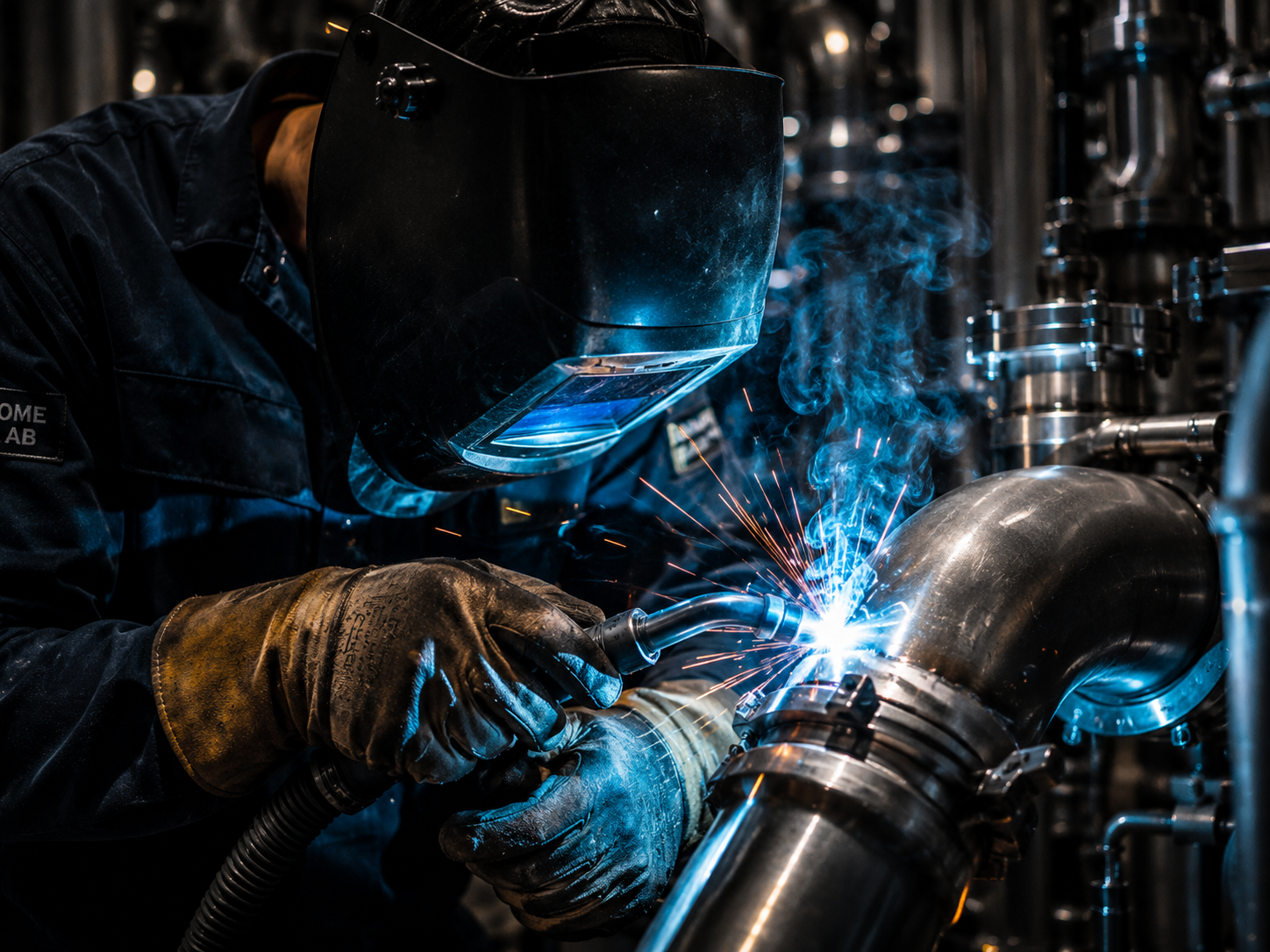
Oracle's Project Jupiter is a 1,400-acre, up to $165 billion AI data center campus in Doña Ana County, New Mexico - one of the largest private construction efforts in American history, built in a rural desert county whose grid and water systems could not come close to supporting it.
The technical challenge is the story. In May 2026, Oracle filed a revised power application that scrapped conventional gas turbines in favor of a Bloom Energy solid-oxide fuel cell microgrid - a non-combustion power source that generates electricity through chemical reaction, cutting projected NOx emissions by 92% versus standard gas backup. Pipefitters are installing miles of large-diameter stainless and carbon-steel closed-loop piping connecting high-density liquid cooling blocks to central heat exchangers, where even a microscopic weld failure could short out millions of dollars of GPU hardware. On the water side, the entire campus is engineered around a one-time fill of approximately 11 million gallons of non-potable industrial well water - which is then continuously recycled, requiring only 4,000 gallons per year in top-offs, eliminating the evaporative water draw that has gotten other hyperscale builds blocked by regulators and communities.
WHY IT MATTERS
More than 75 data center builds worth $130 billion were blocked in just the first four months of 2026 over grid and water concerns. Project Jupiter's fuel cell microgrid and closed-loop water engineering is the answer to that blockage - a blueprint for how to build massive industrial facilities in constrained environments without triggering utility crises or community opposition. The trades that can execute this work - licensed high-voltage wiremen, qualified pipefitters for precision stainless weld applications, controls and instrumentation techs - are going to be in exceptional demand as this model spreads.
With over 1,200 crew members already on site and phased development stretching over a 30-year project horizon, Project Jupiter is entering its active civil and structural phase now - watch the permitting completion and first data hall pour as the bellwether for how the rest of the project sequences.
⚡ QUICK HITS
Meta funds a $115M trade school pipeline. America's Workforce Academy launches in Indiana, Louisiana, Ohio, and Texas - partnering with ABC to put graduates directly onto Meta's active data center sites with NCCER credentials in hand. This is one of the most direct corporate-to-jobsite training pipelines the industry has seen: accelerated instruction, guaranteed placement.
House passes the 120-day union clock bill. The Faster Labor Contracts Act cleared the House 230-193 on June 9, mandating that union certification leads to a first contract within 120 days or a binding arbitration panel steps in. ABC opposes it hard; the Senate is next.
Google puts $50M into skilled trades training. The June 12 announcement targets 14 labor unions and four contractor associations across 20 states, with the electrical training Alliance receiving a mobile training center to bring simulators directly to active construction hubs. The estimate is 300,000 workers reached - a number that speaks to how acute the skilled trades shortage has become for hyperscale developers.
Tutor Perini wins $652M Guam power hardening. The NAVFAC Pacific contract (Project P-1181) puts Tutor Perini and Black Construction into a joint venture to replace Naval Base Guam's vulnerable overhead electrical distribution with underground circuits hardened for typhoon survival. Design starts August 2026; construction kicks in April 2027 through June 2031 - a clean, federally funded multi-year backlog for underground utility and lineman crews.
Off-site modular shaves 30% off data center schedules. A Flex report published June 16 documents how pre-fabricating electrical and cooling systems off-site then dropping them in can cut construction timelines by 30%, with on-site crews shifting from raw fabrication to precision hookup work in cleaner, less congested environments. Watch for this to change the skill mix demanded by data center GCs over the next 18 months.
🔢 ONE NUMBER
Oracle's Project Jupiter in New Mexico is the largest single private construction commitment in United States history.
🔧 THE TOOL
This week's ABC Backlog Indicator data shows an 11.6-month average backlog for contractors working data center projects versus 8.6 months for those without - a 3-month gap that tells you exactly where the work is concentrating. If you're an estimator or PM deciding which bids to chase, the Backlog Indicator (published monthly by ABC at abc.org) deserves a place in your pipeline strategy meeting, not just as a market temperature check, but as a lead indicator of where craft labor is going to be tight and where GCs are going to be hungry for subs. When the data center backlog is running that far ahead of the market average, it means those prime contractors are booking work faster than they can staff it - which is a negotiating window for qualified subs to push better terms before the slot fills.
Pull the regional breakdowns too - the national number masks wide variation. A 14-month backlog in the Southwest tells a different story for your crew availability than a 9-month backlog in the Midwest. Pair it with the JOLTS quit-rate map by region and you've got a rough read on both where the work is queuing up and whether experienced hands are going to be available to do it.
📚 FURTHER READING
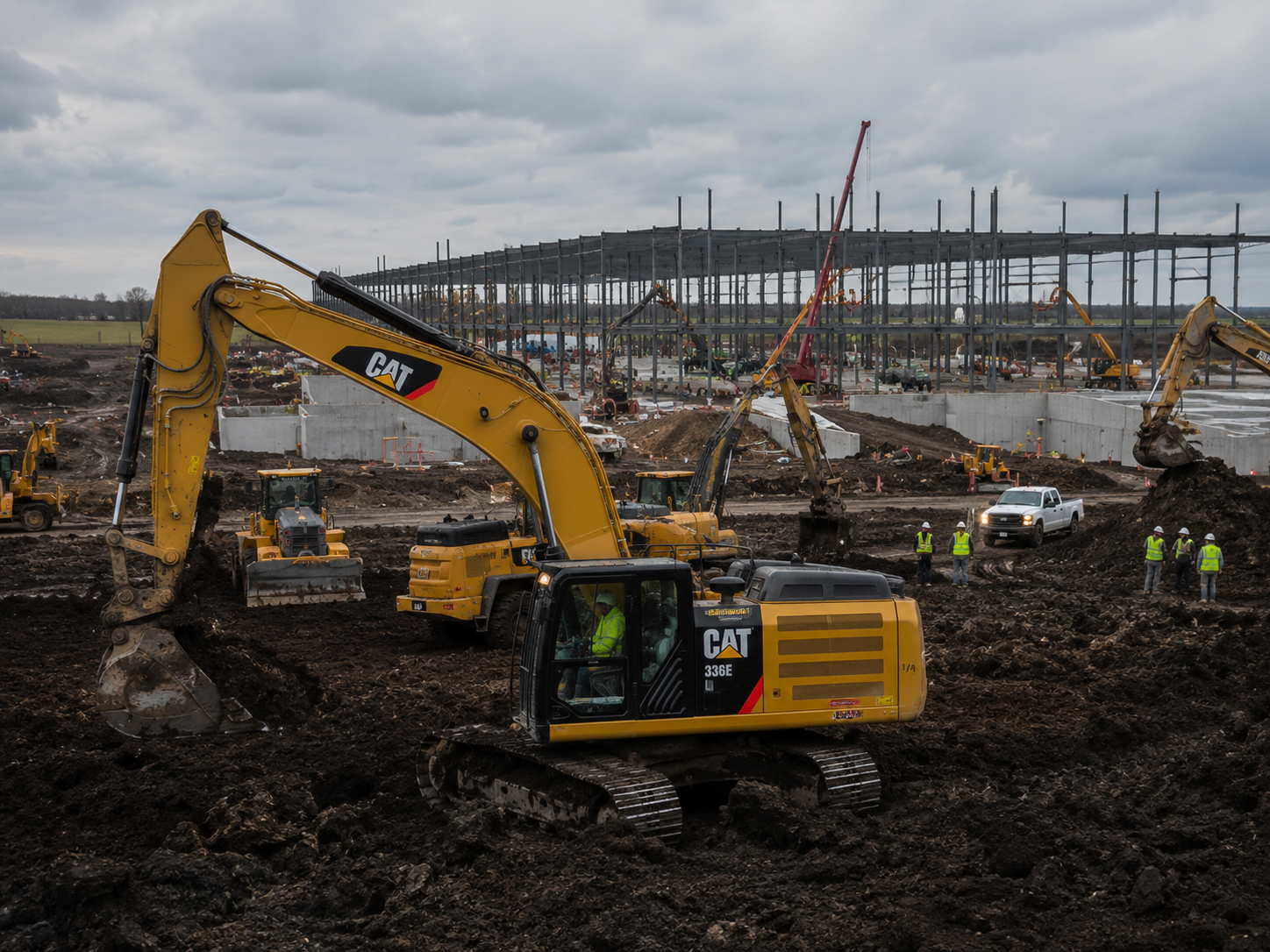
Construction Dive: May backlog hit highest level since 2023, but confidence fell - the divergence between soaring data center backlogs and declining builder confidence on margins is the tension shaping every bid right now.
ENR: Construction Materials Prices Jump 2.6% in May, Up Nearly 10% Year Over Year - tariffs, geopolitical energy disruption, and metals volatility in one place, with the PPI codes you need for escalation clause drafting.
The $165 billion number is real - and it's only possible because the trades figured out how to build a power plant inside a data center. Reply and let us know which of this week's megaprojects is closest to your market. 🏗️
Know someone who would like this? Pass it on.