

Good morning, Construction Pros. Ohio's nuclear past is becoming the AI industry's future, and two of the biggest EPC firms in the business are splitting the build.
- Kiewit and Bechtel in Ohio: 3,700 acres of Cold War uranium land becomes a multi-billion AI data center campus in Piketon.
- Tampa's GC is confirmed: The $2.3B Rays stadium picks its builder before the public financing vote is even in.
- Robots hit active sites: Autonomous excavators are running at Sundt and Zachry, with contractor robotics adoption up 45% year-over-year.
Know someone who would like this? Pass it on.
📊 MARKET PULSE
LABOR PULSE
Job openings hit 305,000 in June, up 36% year-over-year, but contractors are not broadly adding payroll. The 3.9% hiring rate tells you they are filling specific skill gaps on active contracts, not running general recruitment. Workers sitting tight are making the right call: the 1.7% quit rate confirms the market is stable, not hot, and the 4.1% unemployment rate shows there is no reservoir of qualified craft workers to pull from. If you run a journeyman or foreman worth keeping, your retention strategy matters more than your job posting this week.
THE TAKEAWAY
Copper at $13,920/MT (+45% YoY) and steel PPI up 22.5% annually are stacking on top of each other on any MEP-heavy bid. Any proposal going out this week without an explicit tariff pass-through clause is absorbing the owner's cost risk. Lock in a 14-day bid validity window and cite AGC's 7.1% YoY input cost figure if a GC pushes back on your escalation language.
🏗 THE BIG MOVES
Kiewit and Bechtel Split a $4B Nuclear-to-AI Campus in Piketon, Ohio
SB Energy is redeveloping the 3,700-acre Portsmouth Gaseous Diffusion Plant in Piketon, Ohio into a multi-gigawatt AI data center and natural gas power complex, with Kiewit holding EPC for the power plant and Bechtel delivering the data halls, in a project estimated at $2 billion to $4 billion or more. Peak construction headcount is expected to exceed 2,000 union trade workers under long-term project labor agreements, drawing from Southern Ohio, Eastern Kentucky, and West Virginia labor pools. Millwrights will execute optical laser alignment on multi-megawatt turbine shafts while pipefitters on the same site transition between high-pressure gas supply lines and liquid-cooled server loops in the same build cycle.
AECOM Hunt, Turner, and Horus Land the $2.3B Rays Stadium Before Tampa Votes
A joint venture of AECOM Hunt, Turner Construction, and Horus Construction Services was selected as CMAR for the $2.3 billion Tampa Bay Rays ballpark and mixed-use district, with $960 million in public bonds still pending formal votes from Tampa City Council and Hillsborough County commissioners. Peak headcount is estimated at 1,800 to 2,500 craft workers, with deep foundation concrete, structural steel erection, and commercial MEP as the lead scopes. Site clearing is targeted for late 2026, with a full build running through the 2029 MLB season opening.
Skanska-Stacy Witbeck Wins $1.9B LA Metro Light Rail Segment
LA Metro awarded the $1.9 billion East San Fernando Valley Light Rail contract to a Skanska-Stacy Witbeck joint venture, funded through Measure M and Measure R sales taxes and federal IIJA matching grants. More than 1,200 craft workers will build the line at peak under project labor agreements with local hiring quotas enforced, running through 2030. Catenary electricians, traction power crews, and heavy civil operators will be in demand across the Los Angeles basin for the next four years.
🔦 PROJECT SPOTLIGHT
CIVIL MEPUtah's 110-Year-Old Canal Goes Underground in a $750M Pressurization Project
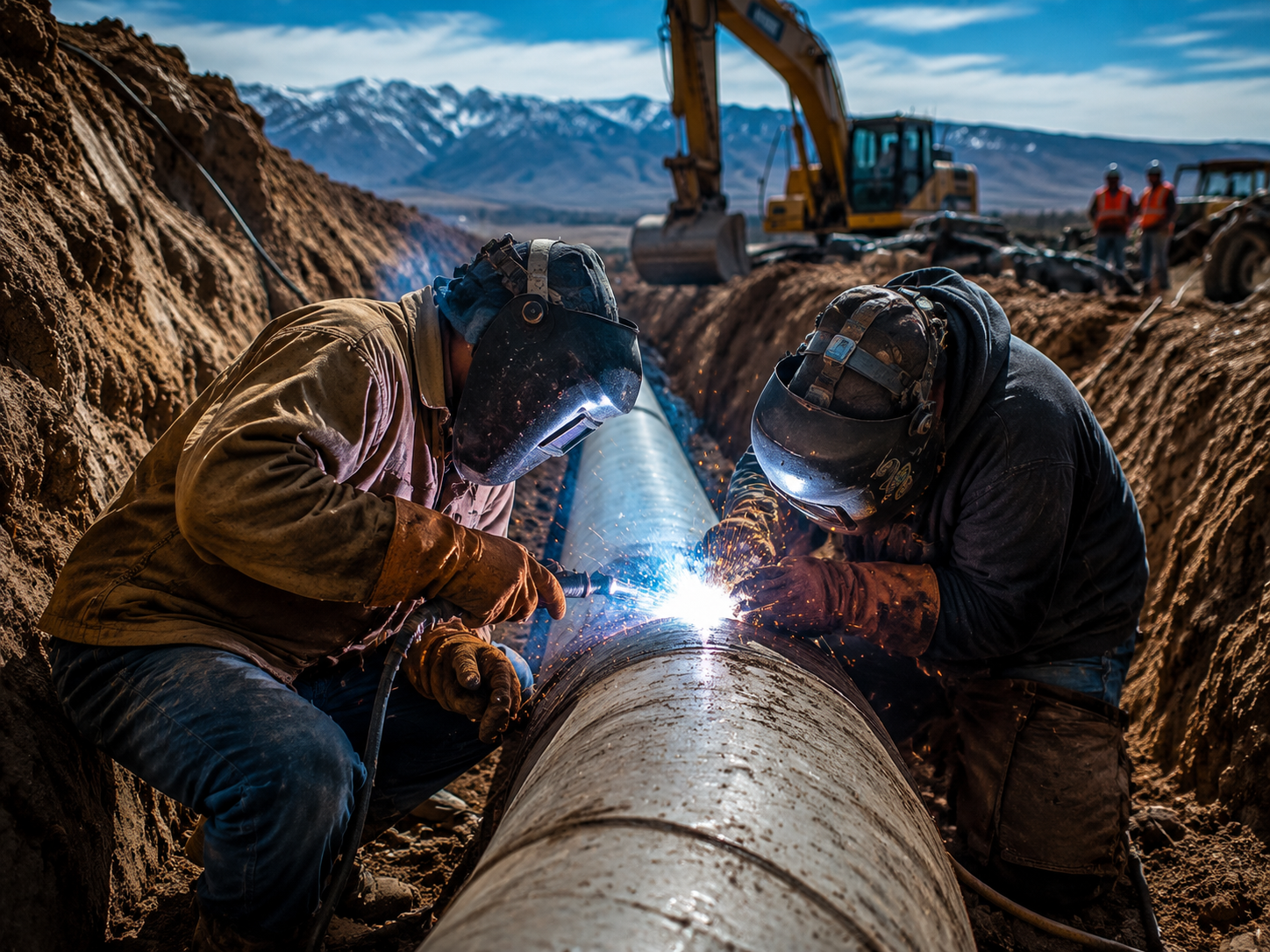
The Central Utah Water Conservancy District awarded a $750 million program management and engineering contract to a Jacobs Solutions and Bowen Collins joint venture to enclose and pressurize the historic Strawberry High Line canal across south Utah County and eastern Juab County, serving 420,000 residents.
The project replaces a century-old open earthen canal with a buried pressurized pipeline network, complete with engineered pump stations and SCADA automation controls across remote, high-elevation terrain. Large-diameter pipefitters, certified pipe welders, and heavy earthmoving crews will work a phased construction window spanning four to six years.
WHY IT MATTERS
Converting a gravity-fed open canal to pressurized buried pipe is not a standard dig-and-fill operation. Terrain transitions, pipe sizing across changing elevations, and hydrostatic test protocols will demand experienced, certified pipefitting crews at every phase. For heavy civil and MEP trades in the Intermountain West, this is a rare, fully funded multi-year public infrastructure commitment in a region where private commercial work dominates the pipeline.
With program management awarded in August 2026, phased trenching operations are expected to begin in 2027.
⚡ QUICK HITS
McCarthy opens an Arizona training campus. McCarthy Building Cos. is converting a former hotel and convention facility in Arizona into a dedicated craft and management training center, giving tradespeople access to structured, employer-funded technical instruction. The program creates direct pathways from field work to supervisory roles without leaving the company.
Meta locks in NABTU for data center labor. Meta announced a national training partnership with North America's Building Trades Unions to build the union craftworker pipeline for hyperscale data center construction across the country. Union tradespeople gain extended apprenticeship resources and long-term project stability backed by direct tech-sector capital.
Autonomous excavators run active commercial sites. Bedrock Robotics deployed fully autonomous excavators on active commercial sites at Sundt Construction and Zachry Construction, as BuiltWorlds data shows contractor robotics adoption surged 45% year-over-year. Equipment operators are transitioning into machine-monitoring roles as the technology takes on high-volume excavation and trenching tasks.
Federal officials halt Big Bend border work. CBP ordered an immediate construction stoppage across Big Bend National Park following environmental organization pushback on terrain damage from access road grading operations. Earthmoving crews face immediate schedule suspensions and potential demobilization while CBP conducts a site review.
Colorado lets subs bond out of retainage. Colorado enacted HB 26-1311, allowing commercial contractors to substitute a surety bond for cash retainage held by project owners, directly addressing cash flow delays across the subcontracting supply chain. The law is effective immediately and applies to commercial construction contracts statewide.
🔢 ONE NUMBER
Nonresidential construction input costs rose 7.1% year-over-year per AGC, as tariff exposure spreads beyond metals into fabricated components.
🔧 THE TOOL
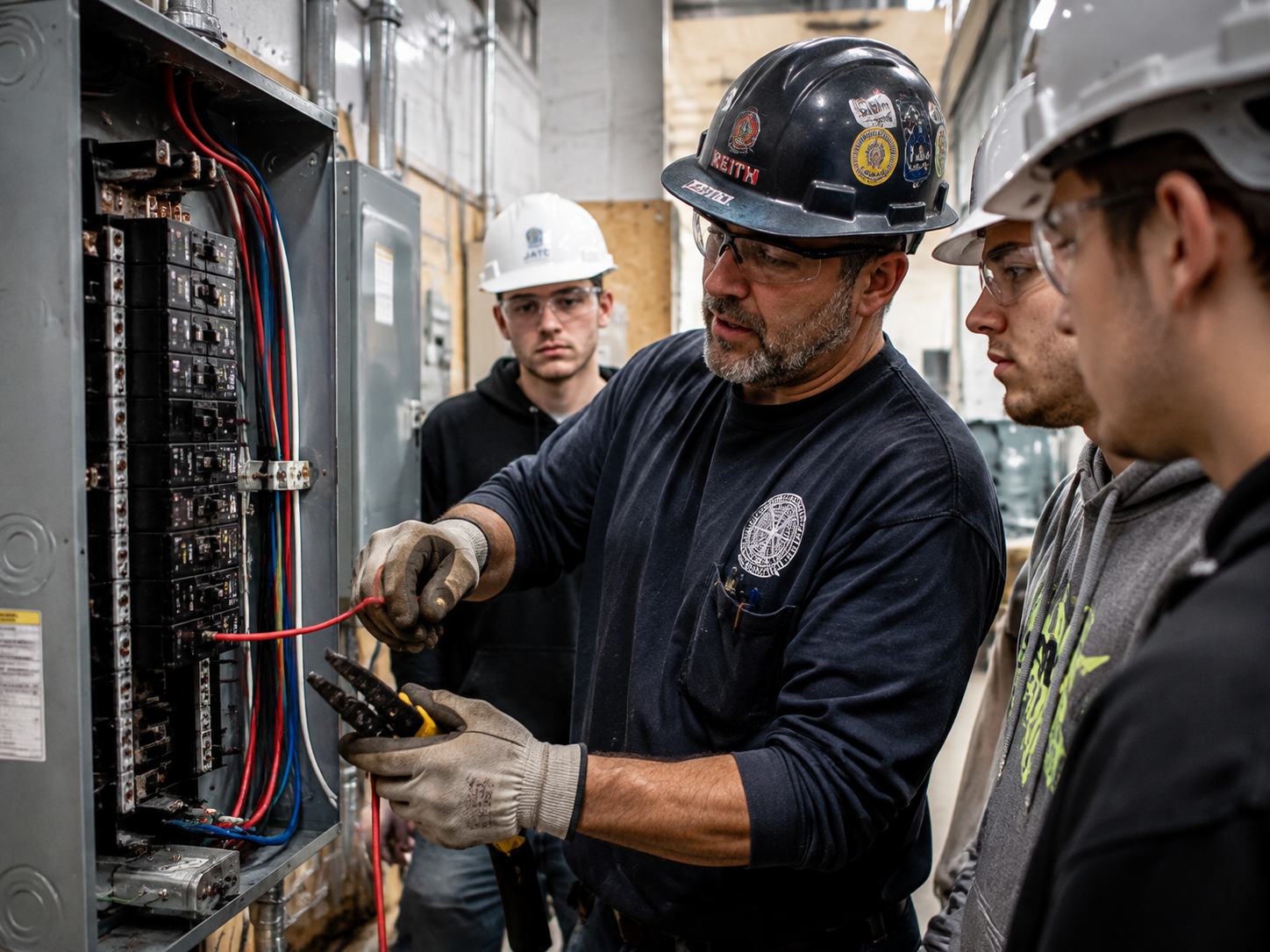
Colorado's new HB 26-1311, covered in this week's Quick Hits, gives you a model worth taking to your next bid regardless of where you work. The law lets subs swap a surety bond for cash retainage, freeing up the 5% to 10% of contract value that would otherwise sit idle in the owner's account for the life of the build. On a $2 million subcontract with 10% retainage, that's $200,000 in working capital back in your hands during construction rather than locked in escrow. Even in states without the law, many owners will accept a retainage bond substitution clause if you show up with the right language, especially when your bonding rate is lower than your line of credit. Call your bonding agent this week and compare what a retainage substitution bond actually costs you versus what you are paying to float that cash.
📚 FURTHER READING
Construction Dive: New construction robots gain traction on jobsites - autonomous excavators running at Sundt and Zachry as site robotics adoption jumps 45% year-over-year.
AGC: Construction Input Costs Climb 7.1 Percent Year-Over-Year - tariffs and supply disruptions are hitting nonresidential inputs hard; essential reading for estimators building any 2026-2027 bid.
Brownfield to brainfield is the defining construction story of this decade, and the trades who know heavy industrial work are positioned for years of it. What is the biggest skill gap slowing your crew right now? 🏗
Know someone who would like this? Pass it on.