

Good morning, Construction Pros. Four months into 2026, materials inflation has produced more cost pressure than the prior three years combined, and this week the bill keeps climbing.
| •Costs surge in April: Input price acceleration just hit its sharpest four-month run in years, and it is already showing up in buyouts. |
| •Pharma eyes Texas: A $1 billion biopharma manufacturing facility is closer to Houston than most crews realize. |
| •Stargate friction grows: The largest AI data center buildout in the country just added a new kind of schedule risk. |
Know someone who would like this? Pass it on.
📊 MARKET PULSE
|
CONSTRUCTION JOB OPENINGS
224,000
Up 23K MoM, down 54K YoY
ABC / BLS JOLTS
|
CONSTRUCTION HIRING RATE
3.7%
Up from 3.5% in Feb, still subdued
BLS JOLTS
|
|
CONSTRUCTION QUIT RATE
1.7%
Up from 1.6% in Feb, below 2019 baseline
BLS JOLTS
|
CONSTRUCTION UNEMPLOYMENT
3.7%
SA, Apr 2026, down from 5.6% in March
BLS CES
|
|
COPPER (LME SPOT)
$13,554/MT
Up 4.9% MoM, tariffs still active
LME / Westmetall
|
STEEL (DOMESTIC MILL)
$2,520/ton
Up; Section 232 tariffs at 50%
Gordian / RSMeans
|
|
NONRES. INPUT PRICES
+7.4% YoY
Up 1.8% in April alone
ABC / ENR
|
TURNER COST INDEX (Q1 2026)
1530
Up 1.32% QoQ, 4.87% YoY
Turner Construction
|
LABOR PULSE
This is still a contractor holding-pattern market. ABC chief economist Anirban Basu called it a market defined by an "utter lack of churn": openings rose month over month but remain well below a year ago, hiring bounced only slightly from February's historically low level, and quits are muted. Workers are sitting tight, not shopping aggressively, and contractors are not broadly adding headcount. For a foreman staffing a new phase, the skilled labor pool is not impossible, but it is not loose either. Retention, targeted pay adjustments, and internal moves matter more this week than broad recruiting headlines.
THE TAKEAWAY
A sub bidding work right now faces real near-term upside risk on copper and steel at the same time broader input prices are running hot. The practical move is to separate metal packages from labor in your estimate, tighten quote-validity windows to 15 to 20 days, and add a tariff-change passthrough clause for any electrical gear, switchgear, or structural steel package. The April 2026 Section 232 changes shifted how tariffs are calculated on many metal-containing products, not just the rates, so old clause language may not cover you.
🏗 THE BIG MOVES
BMS Files Incentives for $1B Houston Pharma Plant
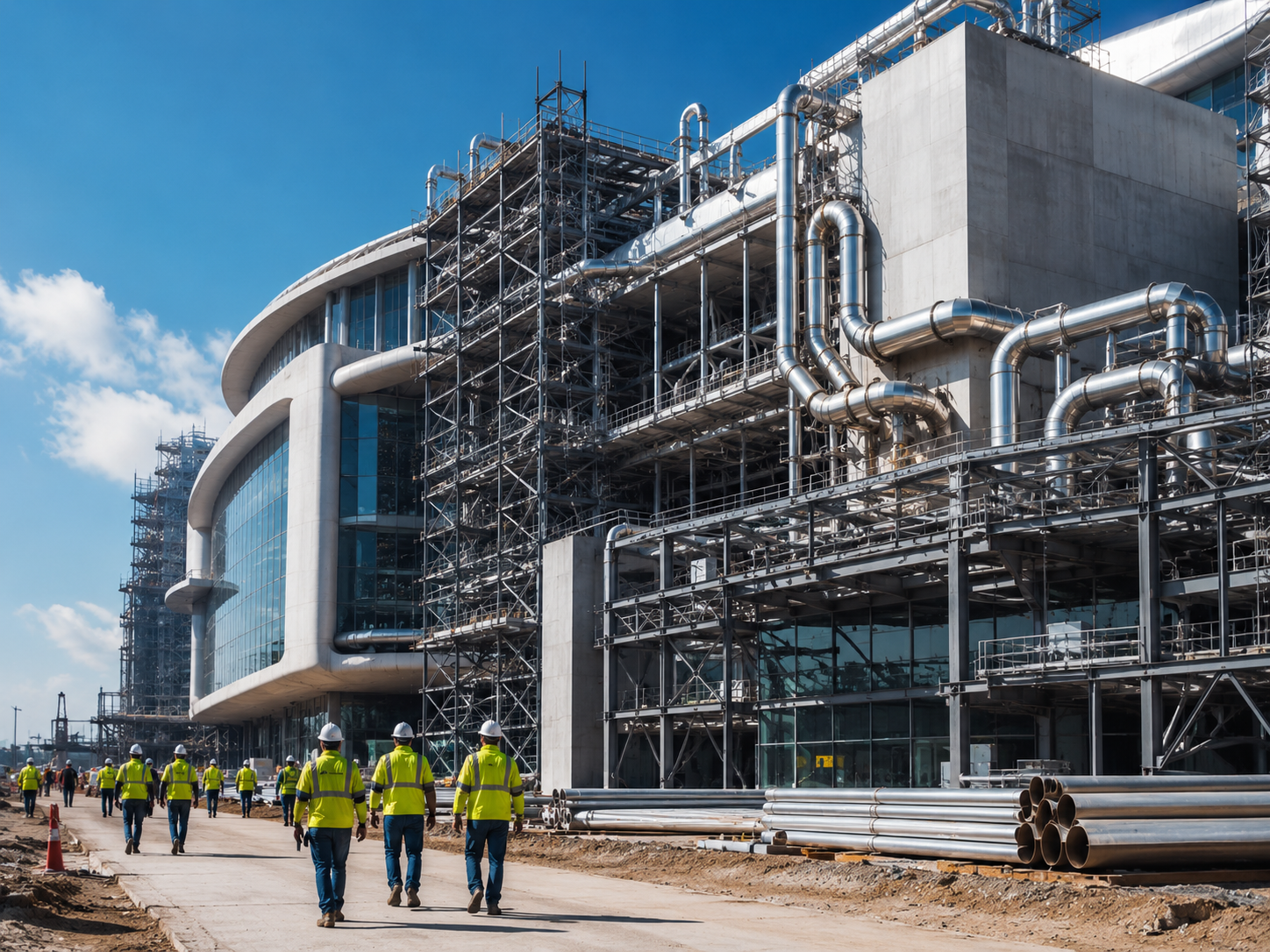
Bristol Myers Squibb has filed a Texas tax incentive application for a proposed $1 billion advanced manufacturing facility on a 104-acre site at Generation Park in northeast Houston, targeting construction start in 2027, a 2029 completion, and operations by 2030, with roughly 489 jobs projected if the site is confirmed. The 600,000-square-foot modular and expandable plant would draw on concrete and structural steel crews first, then shift to process piping, HVAC, electrical, controls, and commissioning as the life-sciences-specific work ramps in later phases. Life-sciences manufacturing demands tighter tolerances, phased utility planning, redundant power distribution, and denser controls coordination than a standard industrial box, meaning the most competitive crews will be those comfortable working from tight BIM coordination sets and transitioning cleanly into validation and commissioning.
USDOT Releases Nearly $1B for Airport Family-Space Upgrades
The U.S. Department of Transportation announced nearly $1 billion on May 18 for family-friendly improvements at airports across the country, covering mother's rooms, family restrooms, children's play areas, and related passenger-facility upgrades across multiple airport recipients. The funding distributes into terminal renovation packages that will keep regional contractors and specialty subs active on interior framing, finish carpentry, plumbing, electrical, low-voltage, and small-package HVAC. These are not headline megaproject towers, but distributed terminal packages in operating airports are technically demanding, require careful phasing around live flight operations, and tend to be steady earners for contractors who know how to sequence constrained renovation work.
OpenAI Hires to Manage Community Friction at Stargate Sites
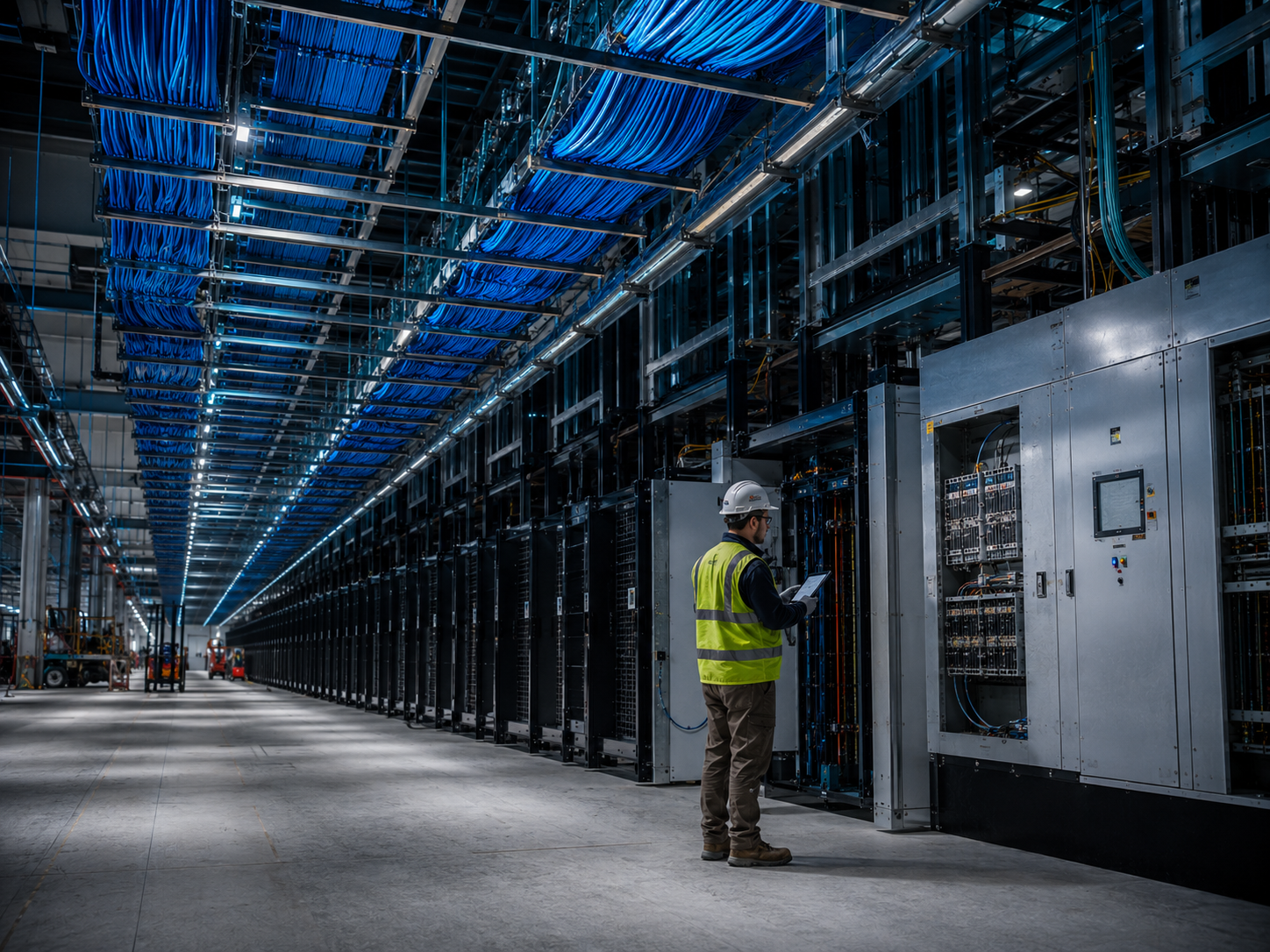
OpenAI posted for a community-engagement lead this week to reduce opposition at Stargate data center construction sites in Texas, Michigan, New Mexico, Wisconsin, and Ohio, with the broader Stargate program previously framed as up to $500 billion in infrastructure investment by OpenAI, Oracle, SoftBank, and MGX. The best-documented active site is the Abilene, Texas campus, where heavy civil, high-voltage electrical, utility trenching, chilled-water cooling, concrete, and steel erection crews are already on the ground at what is intended to be one of the largest AI-focused facilities in the country. For electrical and MEP subs tracking AI infrastructure work, this week is a useful reminder that community opposition around water, energy draw, and noise is now a real permitting variable on these projects, one that can delay a schedule as effectively as a financing gap.
🔦 PROJECT SPOTLIGHT
MEP ELECTRICAL STRUCTURALBMS Generation Park Advanced Manufacturing Plant, Houston, TX
Bristol Myers Squibb's proposed Houston plant is a 600,000-square-foot, modular and expandable advanced manufacturing facility on a 104-acre site in Generation Park, northeast Houston, with a stated value of $1 billion and a construction timeline targeting a 2027 start, 2029 completion, and 2030 operations.
Concrete and steel crews set the early pace on foundations, elevated structure, and equipment pads, then process piping, HVAC, clean-utility systems, and electrical teams take over for the work that actually defines a life-sciences facility. What makes this project technically unusual is its modular, expandable design: phased utility planning, future-capacity allowances baked into electrical and mechanical rooms, and clean-process layouts mean the coordination burden is higher than a straight industrial shell from day one.
WHY IT MATTERS
This project is a window into where advanced manufacturing demand is heading: biotech, pharma, and semiconductor facilities are asking for a fundamentally different skill profile than a standard commercial box. An electrician here is not just pulling power feeds but sequencing around redundant distribution, controls tie-ins, and clean-room interfaces. A pipefitter or mechanical crew is working to tighter tolerances with more quality holdpoints. The crews who get this work will be those who can execute from tight coordination drawings, hit validation milestones, and hand off cleanly into commissioning.
The project is still in the incentive and site-selection phase, with no GC or CM announced publicly. Watch for a Texas Enterprise Fund decision and any BMS capital-commitment announcement through the second half of 2026.
⚡ QUICK HITS
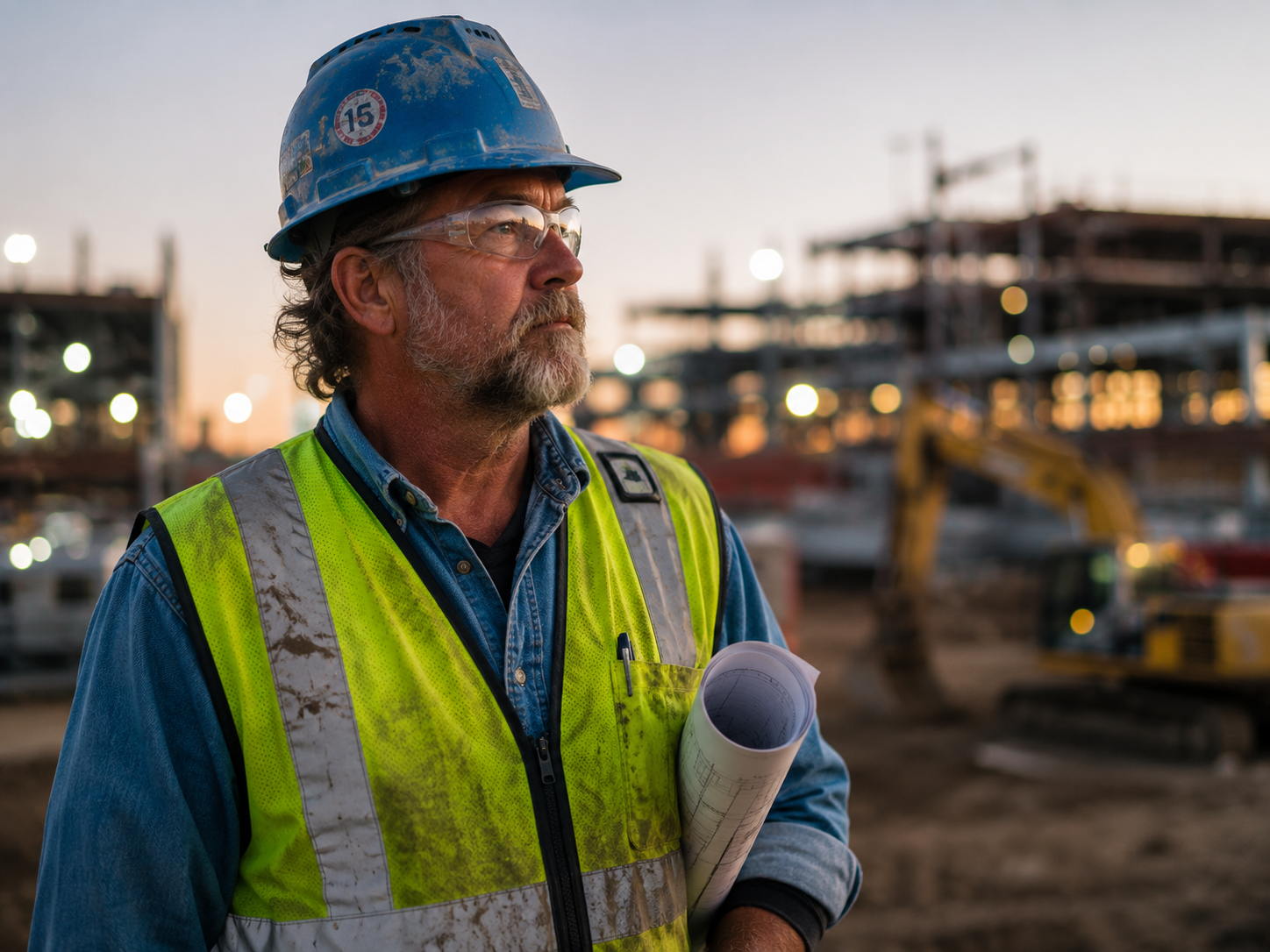
March hiring stayed extremely subdued. ABC reported the hires rate rebounded to 3.7% but called it a bounce from a historically low level, not a signal that contractors are broadly stepping on the gas. Job openings also fell 54,000 year over year, pointing to a market that is stable but not expanding.
Input costs up more in four months than three years combined. ABC's Basu flagged that nonresidential input prices climbed more in January through April 2026 than in the entire prior three-year period combined. If you bid a project six months ago without an escalation clause, you are eating that gap right now.
Dodge planning index jumped 6.2% in April. Dodge's Momentum Index rose 6.2% in April as commercial planning climbed 8.1%, with data centers still driving the nonresidential pipeline. For electrical, civil, and mechanical cooling subs, the forward indicators still point toward AI infrastructure as the steadiest near-term demand source.
April PPI hit its biggest monthly gain since March 2022. BLS reported final demand prices rose 1.4% in April and are 6.0% above a year ago, the sharpest monthly surge in four years. Owners have fresh ammunition to scrutinize every change order and push back hard on cost surprises.
The Fed held at 3.50 to 3.75% and flagged energy risk. The April 29 FOMC statement held rates steady while citing elevated inflation from energy prices and Middle East uncertainty as reasons to move cautiously. For contractors, lenders and owners still have a reason to move slowly on marginal projects even when backlog looks solid.
🔢 ONE NUMBER
The net new workers ABC says the industry must attract in 2026 just to replace retirees and hold current project capacity.
🔧 THE TOOL
This week's copper move and the steady steel creep are a reminder that "materials escalation" as a single blanket line in a subcontract is not enough protection right now. The cleaner play is to name the specific benchmark directly in the clause: LME copper cash settlement for electrical work, SteelBenchmarker U.S. hot-rolled band for structural and deck-heavy packages, and set a reset trigger at any move greater than 3% before purchase order issuance. You should also write tariff exposure separately as a change-in-law passthrough, because the April 2026 Section 232 changes shifted how the tariff is calculated on many metal-containing products, not just the rates themselves, so old clause language may not capture the full exposure. One field rule worth adding to your process: if a vendor quote does not show the benchmark date and the tariff assumption it was priced against, ask for a revised quote before you lock the subcontract. Locking against a vendor's number without knowing what their copper or steel cost basis was assumed at is how you end up absorbing the gap months down the road when no one is in a mood to negotiate.
📚 FURTHER READING
ABC: Construction Materials Prices Soar in April, Up 6.2% Since January - Primary-source breakdown of where nonresidential input inflation is landing, with Basu's commentary on the multi-year cost acceleration.
Construction Dive: Construction Labor Market Stagnant on Hires, Layoffs - Plain-English read on why the holding-pattern labor signal matters for contractors deciding whether to staff up or stay lean.
Input prices moved more in four months than in the prior three years combined, which means your escalation language is either doing its job right now or it is not. Are your metal clauses current? Hit reply and let us know. 🏗
Know someone who would like this? Pass it on.