

Good morning, Construction Pros. This week, copper sets an all-time record, 50% bilateral tariffs with Canada just went live, and the construction labor market has no slack left anywhere in it.
- Copper at $14,650. The LME all-time record is official, and the 50% US-Canada tariff escalation kicked in September 8. Your material costs are moving now.
- $5 billion in Ohio. AWS just committed to one of the largest data center campuses ever proposed in the Midwest, and two more major builds are moving this week.
- 82% can't find workers. Construction unemployment hit a record low in August. Every available tradesperson is already working. The math on crew sourcing doesn't improve from here.
Know someone who would like this? Pass it on.
📊 MARKET PULSE
LABOR PULSE
This is a seller's market for craft labor, with a catch: the sellers are already employed. Construction unemployment hit a record low of 3.1% in August, meaning virtually every available tradesperson is on a payroll. Job openings sit at 326,000 while the hiring rate sits at 3.8%, a near-historic gap between demand and supply. Workers aren't moving either: the 1.8% quit rate tells you crews are sitting tight. For foremen and subs, the message is plain. Keep the crew you have. Replacing a key trade right now takes months and costs a wage premium you didn't price into the job.
THE TAKEAWAY
Copper at an all-time record and nonresidential input prices up 8.9% year-over-year means fixed-price bids are taking a beating. Shorten quote validity windows to 14 days, put copper and aluminum escalation riders in every electrical and mechanical subcontract, and audit any Canadian-origin material specs immediately: 50% bilateral tariffs between the US and Canada took effect September 8 and expanded surcharges follow mid-month. Your quote validity window is your margin protection.
🏗️ THE BIG MOVES
AWS Commits $5B to 18-Building Data Campus in Trenton, Ohio
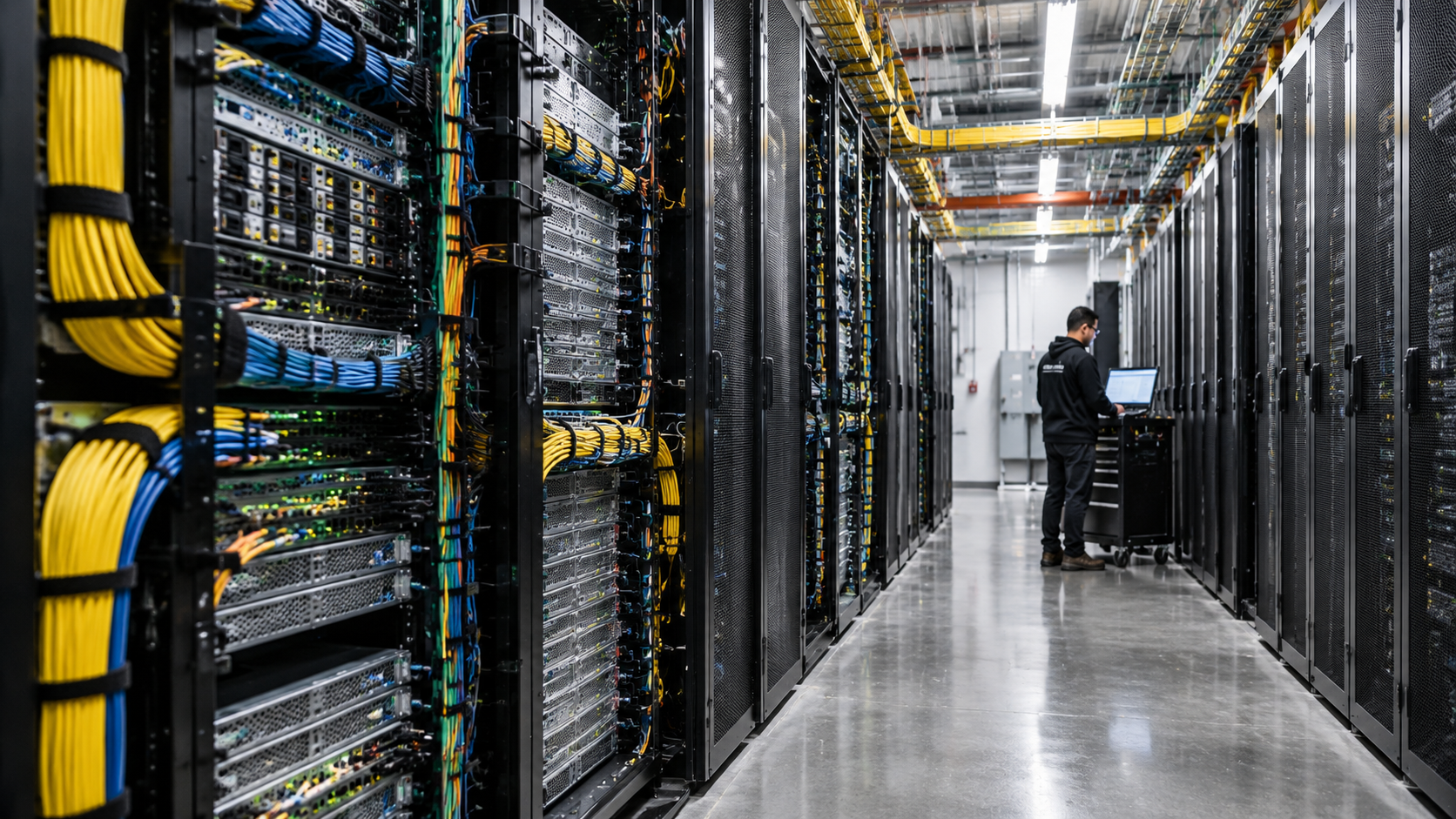
Amazon Web Services is investing $5 billion to build 18 data centers across 601 acres in Trenton, Butler County, Ohio, with municipal annexation approved and state certification pending. Peak construction draws 2,500 to 3,500 craft workers from the Cincinnati metro, Northern Kentucky, and Southwest Ohio, with concrete formwork and electrical utility linemen sustaining work through 18 identical 220,000-square-foot shells into 2031. AWS is funding Duke Energy's substation and grid upgrades directly, but neighboring townships are contesting the annexation before Butler County commissioners, a dispute that could push the Q1 2027 groundbreaking.
Chobani Drops $1.2B on Allentown Plant for Premium Process Work
Chobani closed on a major dairy and beverage manufacturing facility in the Allentown, Pennsylvania region in early September 2026, committing $1.2 billion to a full industrial retrofit and expansion through 2028. The two-year buildout pulls 800 to 1,200 specialized tradespeople from Eastern Pennsylvania, New Jersey, and Northern Maryland, with certified stainless-steel pipefitters, process electricians, and commercial refrigeration mechanics at the front of the demand line. Food-grade sanitary welding qualifications and complex automated packaging system integration put this firmly in premium wage territory for pipefitting and millwright trades through targeted 2028 completion.
Skanska Lands $1.2B for Four Data Centers in the Southeast
Skanska USA secured a $1.2 billion contract from an undisclosed hyperscale client to build four data centers totaling 808,000 square feet across an undisclosed Southeast location, the largest single data center award in the firm's history. Construction begins Q3 2026, with structural shell work absorbing concrete and steel crews first, followed by an intensive 18-month MEP fit-out for commercial electricians, HVAC mechanics, and low-voltage technicians. Peak site staffing of 1,500 to 2,200 workers runs through final commissioning in Q3 2028.
🔦 PROJECT SPOTLIGHT
ELECTRICAL MEP CIVILMeta Hyperion: $50B+ and a New Template for Megaproject Delivery
Meta Platforms is building the world's largest artificial intelligence training cluster in rural Richland Parish, Louisiana: a $50 billion-plus campus targeting 5 gigawatts of compute capacity across nearly 10 million square feet on 2,250 acres.
Instead of a single GC, Meta deployed three tier-one firms simultaneously: DPR Construction, Turner Construction, and Mortenson Construction each managing contiguous campus zones with shared site logistics, safety protocols, and workforce pipelines. Mechanical pipefitters work direct-to-chip liquid cooling manifolds requiring orbital stainless-steel welds and zero-leak hydronic tolerances, while electricians pull medium-voltage Entergy feeds into on-site switchgear vaults and wire megawatt-class UPS banks alongside server floors.
WHY IT MATTERS
The tri-GC execution model and off-balance-sheet SPV funding structure are becoming the standard template for every future multi-gigawatt campus. For the trades: Meta partnered with Louisiana Delta Community College, achieved a 100% graduation rate in the inaugural trade training cohort, and is funding trade certificates for every Richland Parish high school graduate from the class of 2026 forward. Base wages run $45 to $65 per hour with $100 to $150 daily per diem, and the build runs 8 to 10 years. For a working tradesperson, that's not a contract. That's a career.
The campus targets 2 gigawatts of capacity online by 2030, with full buildout slated for 2032. Watch for further GC scope expansions and additional apprenticeship announcements from Richland Parish through year-end.
⚡ QUICK HITS
Cross-craft training adds 39% direct work time. New ABC field research across 33.2 million work hours found that credentialing tradespeople in adjacent complementary tasks increased direct site work time by 39%, with zero fatalities and recordable incident rates well below industry benchmarks. Worth raising with your super before the next crew expansion conversation.
Hard Hat Courage goes national. Bechtel, Turner, Fluor, and Skanska are deploying mental health toolkits for supers and foremen through the American Foundation for Suicide Prevention, targeting a construction suicide rate that runs five times higher than physical jobsite fatality numbers. Ask your GC if the toolkit is on your site.
50% US-Canada tariffs are live. Canada's retaliatory surcharges on $20 billion of U.S. goods, including steel, aluminum, and building products, took effect September 8, with expanded U.S. Section 338 surcharges following mid-month. Any supply agreement tied to Canadian-origin structural materials needs an immediate review.
NYC mandates mental health training for site cards. Local Law 10 now requires mental health, suicide prevention, and substance misuse awareness training as a prerequisite for NYC site safety training cards on all major city job sites. Any craft worker needing card renewal in New York must complete the wellness module before recertification clears.
DPR tops out $250M Craig Hospital in Colorado. The 86,000-square-foot expansion in Englewood stacks two vertical levels atop a fully active neurorehabilitation facility and includes a multi-level steel pedestrian bridge deck, with a peak field crew of 160 tradespeople working inside a live hospital environment throughout the job.
🔢 ONE NUMBER
What hyperscalers are projected to spend on data center capital expenditures in 2026 alone, the single largest driver of construction trade demand in a generation.
🔧 THE TOOL
This week's August employment report shows construction production workers averaging 38.8 hours per week industry-wide, with 3.5 of those already at overtime rates before your project mobilizes. If you're pricing a bid or building a schedule right now, stop using 40 straight-time hours as your labor baseline. Price productive labor time at 38.8 hours per week and build a separate OT contingency line for schedule recovery, not a buffer you hope you won't burn. Then structure your subcontracts to define owner-directed acceleration as a change order trigger, not a cost you absorb. The BLS Employment Situation drops the first Friday of every month and includes this figure. Ten minutes pulling it against your active bids before you finalize pricing protects you on every multi-month commitment you sign right now.
📚 FURTHER READING
Construction Dive: Multiskilled construction is a win for workers, taxpayers and the industry - field data across 33.2M hours showing cross-training lifts direct work time 39% with better safety outcomes.
Construction Dive: Analyzing the US data center construction boom - how $697B in hyperscaler CapEx is reshaping nonresidential demand and creating specialized trade backlogs coast to coast.
Record copper, 50% tariffs, and a labor pool with nothing left to give: if your current bid model doesn't account for all three, it's already wrong. Is your pricing built for the market you're in right now, or the one from two years ago? 🏗️
Know someone who would like this? Pass it on.