

Good morning, Construction Pros. AI infrastructure is rewriting the labor map, and this week three massive project decisions signal where the next crew squeeze hits.
- $10B in Missouri corn fields. Amazon just dropped the biggest data center investment in state history on a thousand acres west of St. Louis.
- Steel near a 15-year record. Hot-rolled band is $5 below the pre-2021 all-time record and still climbing under 50% tariffs.
- NIST finally says why Surfside fell. The findings are changing what inspectors expect from concrete crews and supers nationwide.
Know someone who would like this? Pass it on.
📊 MARKET PULSE
LABOR PULSE
This is still a seller's market for labor, but a calmer one than 2021. Openings are rising again and unemployment stays low, yet hiring rates remain soft and quit rates are flat: contractors are holding crews tight and adding selectively. Workers are not job-hopping for raises the way they were three years ago. For a foreman or sub, the takeaway is straightforward: retention matters more than recruiting right now, and filling specialized slots for data center electrical, pipefitting, and controls work is still genuinely hard.
THE TAKEAWAY
Steel is $5 from a 15-year record and copper carries a 50% tariff surcharge on top of an already elevated spot price. Any fixed-price bid with meaningful metal content needs index-linked escalation language, triggered quarterly at minimum. On long-duration structural or electrical scopes, negotiate procurement timing now or carry explicit tariff pass-through language or you are absorbing someone else's trade-policy risk.
🏗 THE BIG MOVES
Amazon's $10B Missouri Campus Targets Rural Power Country

Amazon announced a $10 billion data center campus on 1,000 acres near New Florence, Montgomery County, Missouri, with civil grading already underway by NorthPoint Development since April. Montgomery County authorized up to $35 billion in industrial revenue bonds for future phases, signaling a long-duration build that could stretch well beyond 2031. Peak construction will pull 1,500 to 2,000 workers from St. Louis and Columbia labor basins, with the heaviest early trades being heavy civil earthwork, concrete, underground utilities, and electrical crews who must wire AWS's self-funded Ameren grid tie-in before the buildings go vertical.
JetZero Breaks Ground on $4.7B Aircraft Factory in Greensboro
JetZero broke ground June 15 on an 8-million-square-foot manufacturing campus at Piedmont Triad International Airport, Greensboro, North Carolina, backed by a $4.7 billion investment and described by the state as the largest job commitment in North Carolina history at 14,500 positions over a decade. The scope is first-of-kind for blended-wing aircraft: early work is concrete, structural steel, and industrial electrical, but the long tail includes smart-factory fit-out, composite-focused interiors, and aerospace manufacturing line installation that will draw millwright-adjacent crafts and controls specialists for years. Greensboro's labor market is now competing with every other megaproject region for the same industrial electricians and advanced-manufacturing support trades that are already stretched thin.
Chevron and Microsoft Sign 20-Year Deal for 2.67 GW West Texas AI Campus
Chevron's Energy Forge One and Engine No. 1 signed a 20-year agreement on June 22 to develop a 2.67-gigawatt co-located power-and-data-center complex near Pecos, Texas for Microsoft, expecting first power in 2028 and nearly 2,000 construction and support jobs. This is not a typical data center: gas-fired turbines from GE Vernova and Solar Turbines plus brackish-groundwater cooling mean pipefitters will be as busy on industrial energy systems and water infrastructure as on conventional building MEP. High-voltage electrical, controls integration, switchgear installation, and liquid-cooling crews are the highest-demand trades on this job, and the final investment decision for full construction mobilization is expected later in 2026.
🔦 PROJECT SPOTLIGHT
MEP ELECTRICAL DATA/TECHNew York State's $1.7B Wadsworth Public Health Lab, Albany
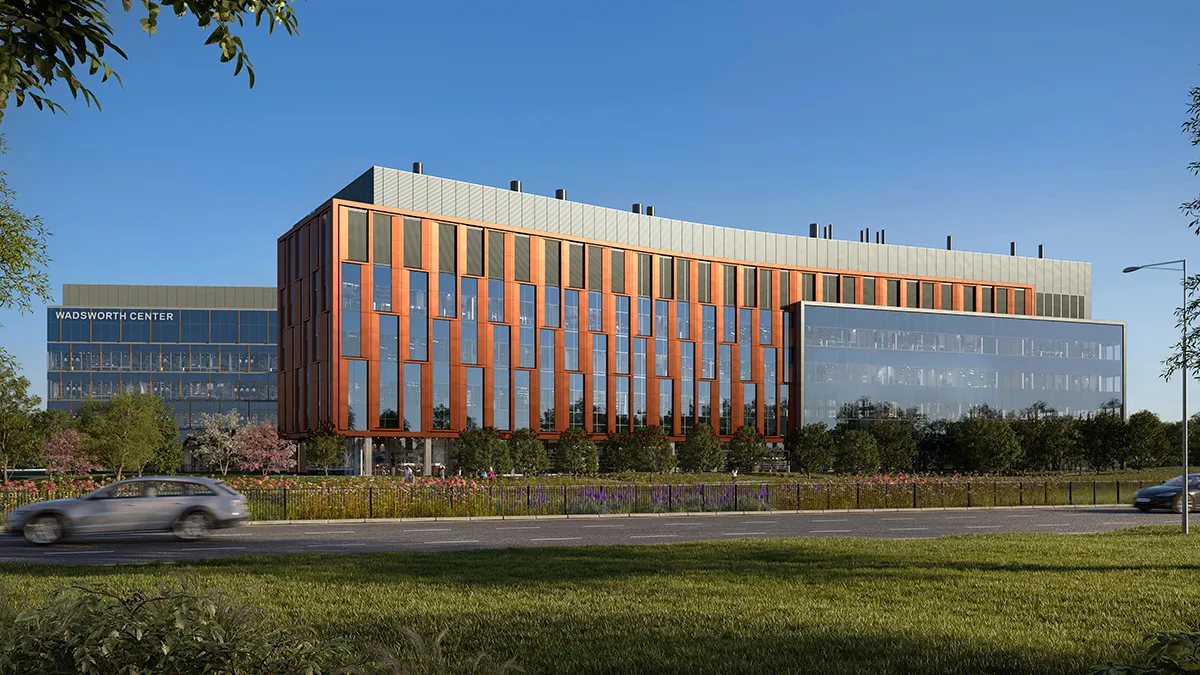
The Wadsworth Center consolidation project is a $1.7 billion, 663,000-square-foot scientific campus replacing five aging, scattered labs across the Albany area with a single fully electric facility on the W. Averell Harriman State Campus, delivered by a Gilbane-Turner joint venture with HOK as lead architect and Jacobs providing independent technical oversight.
Mechanical, pipefitting, electrical, instrumentation, and cleanroom specialty trades are all active. What makes this technically unusual is the biosafety requirement: the facility houses high-containment lab space with redundant clean-power electrical systems, precision HVAC air filtration for pathogen work, and laboratory gas pipefitting held to standards far above standard commercial tolerances. Jacobs finalized its technical advisory contract on June 23, 2026, adding independent QA oversight across architectural, engineering, and construction disciplines.
WHY IT MATTERS
This is the type of institutional project that insulates regional trade labor from private-market volatility. An 850 to 1,000 person peak workforce drawing from the Albany-Schenectady-Troy metro means four-plus years of high-wage MEP and cleanroom work that does not disappear when commercial office demand softens. For electricians and pipefitters with life-sciences certifications, this is exactly the backlog anchor worth tracking.
Foundation and structural framing are active now, with full operational commissioning targeted for 2030. Watch for the MEP and cleanroom fit-out phases beginning approximately 2027 to 2028 as the biggest labor draw for specialty trades.
⚡ QUICK HITS
NIST releases the Surfside collapse findings. NIST concluded the Champlain Towers collapse began when two garage-column-to-pool-deck connections failed, triggered by design deficiencies, construction deviations, added loads, and long-term corrosion. Concrete crews, detailers, inspectors, and supers should expect renewed owner and inspector focus on as-built accuracy, reinforcement placement tolerances, and deferred-maintenance documentation.
DPR and Suffolk back AI hiring tool Skillit. Skillit announced a strategic partnership with DPR Construction and Suffolk Technologies to scale AI-powered craft worker sourcing and screening, explicitly framing it as a response to the skilled-labor shortage. Two top-10 ENR firms backing the platform is a signal: the GC side of the labor market is investing in faster mobilization infrastructure for exactly the trades that are hardest to staff on fast-ramping data center and advanced manufacturing projects.
Walsh-Turner clears the $580M Kentucky utility plant. The Walsh-Turner joint venture reached financial close June 11 on a $580 million central utility plant at the University of Kentucky, a P3 deal backed by $424 million in tax-exempt bonds. Pipefitters, mechanical contractors, electricians, and concrete crews have a 35-month build with a 30-year O&M tail: this is stable, high-quality institutional work that does not evaporate after the ribbon cutting.
Virginia approves a $28.5B six-year infrastructure program. Virginia locked in $28.5 billion across a six-year transportation and infrastructure plan tied to thousands of jobs statewide. Highway, bridge, utility, and transit crews in Virginia now have a cleaner forward pipeline, which matters for bid sequencing and craft hiring decisions heading into 2027 procurement cycles.

Chicago Laborers lock in a $3.77 hourly bump. LIUNA's Chicago District Council finalized a $3.77 per hour total compensation increase effective June 1, 2026, pushing the base wage rate to $53.00 per hour with additional welfare and pension contributions. Signatory employers in the Westchester and Fox Valley funds are affected immediately: update your labor cost assumptions on any Chicago-area bid going forward.
🔢 ONE NUMBER
U.S. data center construction spending through April 2026, up from $13.6B over the same period in 2025: a 3.6x surge in 12 months.
🔧 THE TOOL
Steel is $5 from a pre-2021 record high and moving on a biweekly clock, which is exactly when a basic steel escalation clause pays for itself. The approach is simple: pull SteelBenchmarker's U.S. hot-rolled band price on the day you bid, lock that as your baseline, and write the clause to trigger an adjustment only after a defined move, say $60 per metric ton in either direction, so you are not renegotiating every two weeks on noise. When the trigger trips, the adjustment is the delta multiplied by your estimated tonnage for remaining structural steel, rebar, or metal decking on the scope.
Specify in the clause whether you are using the U.S. domestic mill price or the export price, because they diverge under tariff pressure, and keep the adjustment mechanism bilateral so the owner benefits from any drop just as you benefit from a spike. Pair this with explicit Section 232 pass-through language for tariff-driven cost changes that sit outside the index, since a 50% tariff hike is not captured by SteelBenchmarker's domestic mill figure alone. On any structural scope over 200 tons, this clause takes 20 minutes to draft and can protect a six-figure margin on a volatile market.
📚 FURTHER READING
AGC News: Construction Industry Shows Resilient Growth in 2026 Mid-Year Economic Outlook -- the cleanest single read on employment, diesel costs, and sector mix heading into Q3.
NIST: Technical Findings on the 2021 Champlain Towers South Collapse -- primary-source safety document that will shape inspection and detailing conversations for concrete work for years.
AI infrastructure is not slowing down, and the trades that know how to work inside it are going to be well-positioned for the next several years. What are you seeing on your jobs this week? Hit reply and let us know. 🏗
Know someone who would like this? Pass it on.